Made With Love, Ignored by the Algorithm: Protecting the Work That Actually Matters
There's a specific kind of heartbreak that entertainers almost never talk about publicly. It's not getting rejected. It's not bombing a performance or reading a bad review. It's uploading something you genuinely, deeply care about — something that cost you sleep and second-guessing and maybe a few tears — and watching it flatline while a video you dashed off on a Tuesday afternoon somehow becomes the thing everyone shares.
If you've been in this industry for more than five minutes, you already know this feeling. And if you're newer to it, buckle up, because it's coming.
The tension between craft and content is one of the defining struggles of being a creative person in 2024. It's not new — artists have always wrestled with commerce versus expression — but the speed at which the algorithm delivers its verdict has made the whole thing feel more brutal, more personal, and a lot harder to shake off.
What We Actually Mean When We Say "Content"
Let's get honest about the word "content" for a second. When platforms and brand deals and marketing decks use it, they mean something pretty specific: material optimized to perform. Hooks in the first three seconds. Trending audio. Relatable formats. Shareable moments. Content is engineered to travel.
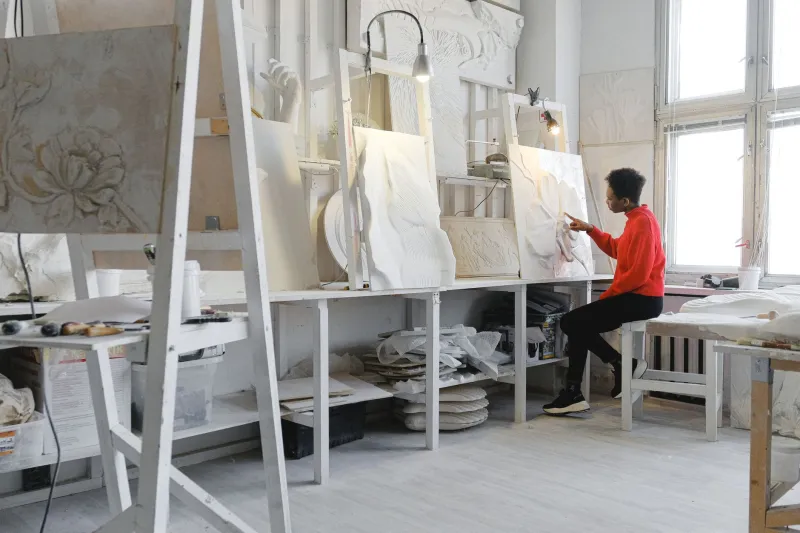
Craft, on the other hand, is what you make when you're not thinking about the algorithm at all. It's the short film you edited for six weeks. The song that took three years to finish because the bridge wasn't right until it was. The essay that scared you to publish because it said something true.
Neither of these is inherently better than the other. That's actually the first thing worth understanding. There's no moral high ground in making art that nobody watches, and there's no shame in making content that connects with a massive audience. The problem shows up when you start letting one completely crowd out the other — or when you can't even tell the difference anymore between what you actually want to make and what you've trained yourself to make because it performs.
The Metrics Trap Is Real
Platforms are extraordinarily good at one thing: teaching you to want what they reward. Every like, every share, every comment that rolls in after a piece of content pops off sends a little signal to your brain. Do more of that. That's the good stuff.
And here's the insidious part — it works. You start optimizing without even realizing you're doing it. Your creative instincts slowly recalibrate around what got traction last time. You start pre-filtering your own ideas before they even fully form, asking "but would this perform?" before you've even asked "but do I care about this?"
That's not weakness. That's just how reward systems work on human brains. But recognizing it is the first step toward not being completely at its mercy.
Deciding When to Play the Game
Here's a framework that a lot of working entertainers use, even if they don't call it that: separate your output into lanes.
One lane is your craft work. This is the stuff you make for yourself first, audience second. It lives by its own rules. You don't chase trends with it. You don't A/B test the thumbnail. You make it because it needs to exist, and then you put it out there and let it find whoever it's going to find.
The other lane is your content work. This is where you're more intentional about reach. You're paying attention to format, timing, hooks, what's resonating in your space. You're not selling out — you're being strategic. There's a difference.
The key is knowing which lane you're in at any given moment. Trouble starts when you try to run both lanes simultaneously and end up halfheartedly doing both. Your craft work gets compromised because you're worried about performance. Your content work feels hollow because you're secretly wishing it were more personal. Neither one lands the way it should.
Be deliberate. Make a decision before you start. "This one is for the work. This one is for the reach." And then commit.
The Long Game Your Algorithm Doesn't See
Here's something the metrics dashboard will never show you: craft work builds reputation in ways that content almost never can.
The pieces that take forever to make, the performances that feel risky, the projects that don't fit neatly into a trending format — those are the things that people remember years later. Those are what get you hired for the interesting opportunities. Those are what your peers talk about when they talk about you.
Viral content builds audiences. Craft builds careers. You need both, but don't confuse one for the other.
Also worth noting: some of the most impactful work in entertainment history was ignored when it first came out. Audiences catch up. Slow burns are real. The work you made in 2021 that got 300 views might be the thing someone discovers in 2026 that makes them want to collaborate with you, hire you, or just become the kind of fan who actually shows up.
Protecting the Work Without Becoming Precious About It
There's a version of "protecting your craft" that tips over into ego. The artist who refuses any compromise ever, who treats every creative choice like sacred ground, who can't distinguish between a meaningful boundary and just being difficult. That's not integrity. That's fear wearing a costume.
Real creative integrity means knowing your non-negotiables and being flexible about everything else. Maybe you'll use a trending sound on a piece of content this week. Maybe you'll adjust the format of something to make it more shareable. Those aren't betrayals. They're just choices.
The line gets crossed when the compromise touches the core. When you change the actual message because you're worried it won't perform. When you sand down the weird, specific, true parts of your perspective because you think a broader audience wants something smoother. That's when you've given up something you can't get back.
Know where your line is before you're in the moment of deciding. Because in the moment, with a deadline and a brand deal and your analytics staring at you, it's really easy to rationalize crossing it.
You Don't Have to Choose One Forever
The entertainers who seem to navigate this the best aren't the ones who picked a side. They're the ones who got comfortable living in the tension.
They make content that performs, and they make work that matters, and they don't apologize for either one. They've stopped waiting for the algorithm to validate the stuff they actually care about, and they've stopped being embarrassed about making things that are deliberately built to reach people.
Both things can be true. You can be commercially savvy and creatively serious. You can care about reach and care about craft. The work doesn't have to be pure to be good, and it doesn't have to perform to be worth making.
The piece that never gets watched might still be the one that changes everything for you. Don't stop making it just because the dashboard doesn't care.