The Quiet Season: Why the Work You Make When Nobody's Watching Is Often Your Truest
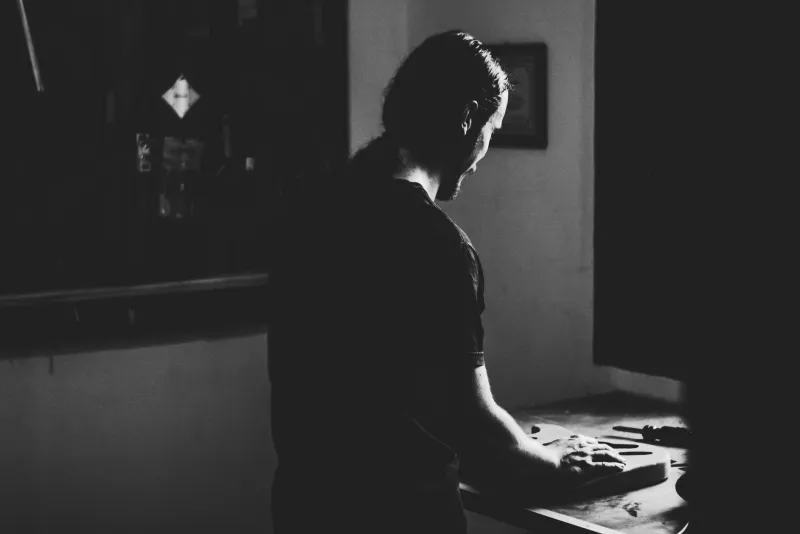
There's a specific kind of silence that follows a spike in attention. Maybe something you made went wider than you expected. Maybe a project landed well and then the moment passed, the way moments do. The comments slow down. The notifications thin out. And suddenly you're back in your space — your studio, your bedroom, your kitchen table — without the noise.
Most people treat that silence like a problem to solve. Like the goal is to get back to the spike as fast as possible. But I've been thinking a lot lately about what actually lives in that quiet stretch. Because if you pay attention, something interesting tends to happen there.
The Pressure Drop
When attention is high, everything you make carries a kind of invisible weight. You're not just creating — you're creating for something. For the audience that just found you. For the expectations that came with the moment. For the version of yourself that the algorithm decided to amplify. It's not always conscious, but it shapes every choice you make: what you say, what you leave out, how you frame it.
Then the attention dips, and that weight lifts.
This is what I think of as the quiet season. The valley between peaks. And counterintuitively, it's one of the most fertile creative windows available to anyone doing this kind of work.
When you're not performing for a surge, you start making things for different reasons. You experiment because you're curious, not because you're trying to replicate a hit. You follow a thread that interests you even if you can't explain why it would interest anyone else. You let things be unpolished because there's no one waiting for perfection.
Why Authenticity Thrives in the Lull
Here's the thing about performing for an audience — even a beloved one: it introduces a subtle but real filter between you and your work. You start anticipating reactions before you've even finished the thing. You self-edit in real time. You make a hundred tiny decisions shaped by imagined responses rather than genuine instinct.
The quiet season removes that filter. Or at least, it softens it enough that you can hear yourself again.
A lot of artists, when they look back at their catalog, find that their most interesting work — the stuff that aged best, the stuff that still surprises them — came from exactly these kinds of in-between periods. Not the triumphant releases, not the big-push projects. The weird little thing they made because they were bored and restless and had no stakes riding on it.
That tracks. Because when the stakes are low, the risk tolerance goes up. And that's when you try things you'd never greenlight under pressure.
Protecting the Space Instead of Rushing Through It
The instinct when things get quiet is to fill the silence. Post more. Pitch more. Remind people you exist. And sometimes that's the right call — momentum is real, and letting it die completely has its own costs.
But there's a version of that hustle that skips over something valuable. If you're always sprinting toward the next spike, you never actually inhabit the valley. You never let the quiet do its work on you.
Protecting this space looks different for everyone, but some things that actually help:
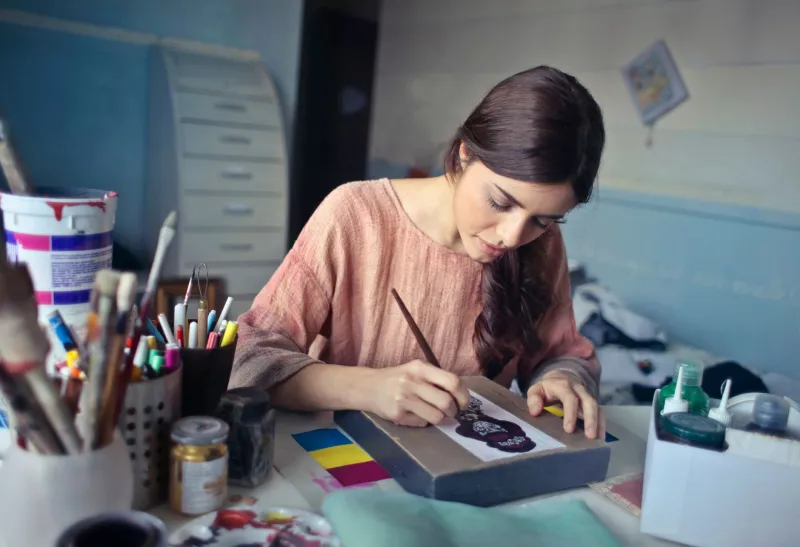
Give yourself a window of permission. Decide that for a set period — even just two or three weeks — you're going to make something with no distribution plan attached. Just make it. See what comes out when there's nowhere it needs to go.
Resist the urge to document everything in real time. The quiet season isn't content. It's the thing that eventually becomes content, but only if you let it breathe first. Turning every in-between moment into a behind-the-scenes reel collapses the very space you're trying to protect.
Notice what you're drawn to without an audience. What do you want to make when no one's asking for anything? That question is a compass. It points at the work that's genuinely yours, not the work that's been shaped by external demand.
The Awkward Part Nobody Talks About
Let's be honest: the quiet season doesn't feel creative when you're in it. It mostly feels like stagnation. Like you're falling behind. Like everyone else is moving and you're standing still.
That discomfort is part of the deal. It's also, weirdly, part of what makes the work that emerges from it so different. When you've sat with the uncertainty long enough, when you've stopped waiting for the pressure of an audience to tell you what to make, something shifts. You start making things because you need to, not because it's time to post.
That's the energy that people can actually feel on the other side of a piece of work. Not the polished, pressure-tested version — the one that came from genuine necessity.
The Valley Is Part of the Career
If you zoom out on any creative career that's lasted more than a few years, you'll see the pattern: peaks, valleys, peaks, valleys. The valleys aren't failures. They're part of the rhythm. And the people who figure out how to use them — rather than just endure them — tend to be the ones whose work evolves in ways that keep surprising people.
So the next time the noise fades and the quiet rolls in, try sitting with it a little longer before you reach for the content calendar. There might be something in there that's been waiting for exactly this kind of space.
And it might be the realest thing you've made in a while.