Stop Performing, Start Living: How Real Beats Polished Every Single Time
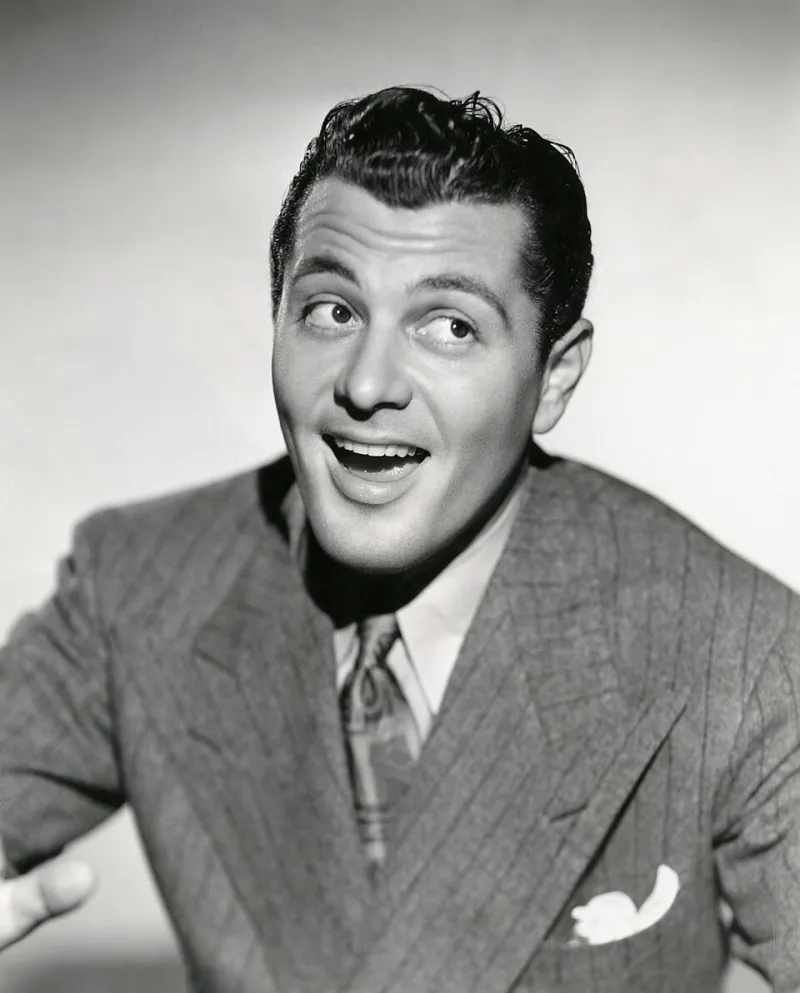
Photo: Whitey Schafer, Public domain, via Wikimedia Commons
There's a moment every entertainer knows. You're standing in front of a camera, lights blazing, and you have a choice: give them the version of you that's been rehearsed, filtered, and focus-grouped — or just be yourself and hope that's enough.
For a long time, the industry told us the answer was obvious. Polish everything. Control the narrative. Never let them see you sweat. But somewhere between the rise of Instagram Stories, TikTok confessionals, and podcasts where celebrities cry openly about their struggles, something shifted. Audiences stopped trusting the performance. And they started craving the person underneath it.
The Death of the Manufactured Persona
Let's be honest about what the old entertainment playbook looked like. Publicists managed every quote. Stylists curated every appearance. Interview answers were pre-approved and so safe they were practically beige. Stars existed at a careful distance — aspirational, untouchable, and increasingly, irrelevant.
The numbers tell the story. Micro-influencers with audiences under 100,000 followers consistently outperform mega-celebrities in engagement rates, sometimes by a factor of five or six. A creator filming themselves ugly-crying in a parking lot after a hard audition gets more comments than a glossy magazine feature. Why? Because people recognize that parking lot moment. They've lived it themselves.
This isn't just a social media phenomenon. It's a fundamental rewiring of what audiences expect from the entertainers they choose to follow. The transactional relationship — you entertain me, I watch — has evolved into something almost relational. Fans want to feel like they know you. And you simply cannot fake that over time.
Why Your Audience Knows When You're Faking It
Here's the uncomfortable truth that nobody in a corner office wants to admit: people are extraordinarily good at detecting inauthenticity. It's almost biological. We evolved to read faces, voices, and micro-expressions for survival — and those same instincts work perfectly when someone is performing sincerity rather than feeling it.
You've seen it happen in real time. A celebrity delivers a carefully worded apology that hits every note of remorse but somehow lands completely flat. A brand partnership post uses words the creator would never actually say. A behind-the-scenes video feels more staged than the actual production it's supposedly revealing. The audience clocks it immediately, and the comment section becomes a courtroom.
Contrast that with the moments that actually go viral for the right reasons. A musician breaking down during a live performance because the song means something personal. An actor admitting in an off-the-cuff interview that they almost quit the industry. A creator sharing a genuine failure without the redemption arc neatly packaged at the end. These moments spread because they feel true, and truth is contagious.
The Pressure to Stay Real While Building a Brand
Here's where it gets genuinely complicated, and it's worth sitting with this tension rather than pretending it doesn't exist. Authenticity, at scale, becomes a brand. And the moment you're aware of your authenticity as a brand asset, are you still being authentic?
This is the tightrope every working entertainer walks. You have to be real enough to connect, strategic enough to sustain a career, and self-aware enough to know when one is bleeding into the other. Industry managers will tell you to "be yourself" in the same breath as they hand you talking points. It's a contradiction that doesn't fully resolve.
What the most successful entertainers seem to have figured out is that authenticity isn't the same as total transparency. You don't have to share everything to be genuine. You just have to mean what you do share. The line isn't between private and public — it's between honest and performed. You can have boundaries and still be real. In fact, watching someone maintain healthy boundaries in real time might be the most authentic thing of all.
What Separates a Viral Genuine Moment from Manufactured Content
Spend enough time online and you develop a sixth sense for content that was engineered to look spontaneous. The lighting is too good. The emotional beat resolves too cleanly. The caption has too many strategic hashtags for someone who was supposedly just having a raw moment.
Authentic viral moments tend to share a few qualities. They're usually imperfect — bad lighting, someone talking over themselves, an emotion that doesn't have a tidy name. They often weren't planned to be content at all. And crucially, they don't ask anything of the audience. They're not trying to sell you something or build toward a call to action. They just exist, and that existence is what makes people want to share them.
Manufactured content, even when it's well-executed, almost always has an agenda visible just beneath the surface. The audience isn't dumb. They see the seams.
What This Means for Anyone Building an Entertainment Career Right Now
If you're an entertainer — whether you're performing on a major stage or building something from scratch in your living room — the message from audiences couldn't be clearer. They want the real you more than they want the best version of you.
That doesn't mean abandoning craft or professionalism. It means letting your humanity show through the craft. It means being willing to share the process, not just the product. It means occasionally saying something true even when the PR-safe answer would be easier.
The entertainers who are going to define the next decade aren't going to be the most polished. They're going to be the most present. And presence — real, unguarded, honest presence — is something no amount of production budget can manufacture.
The audience is always watching. The question is: what are you showing them?