Two Voices, One Truth: What Collaboration Actually Teaches You About Yourself
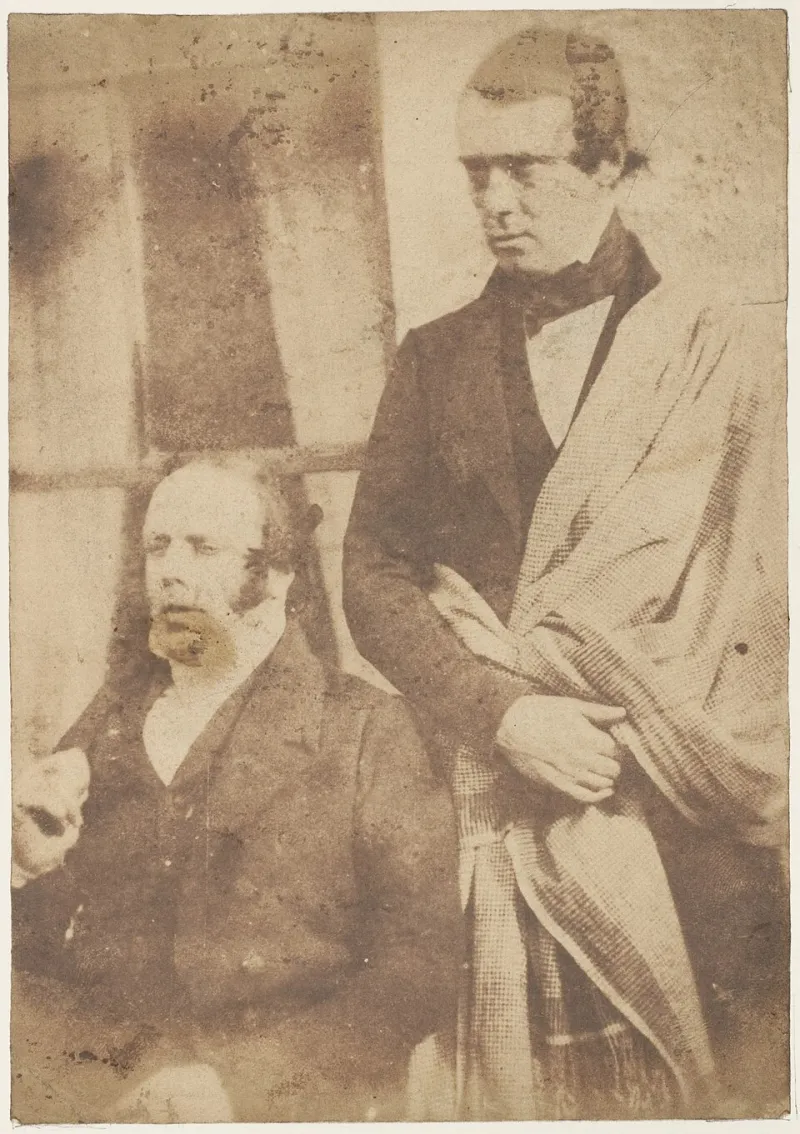
Photo: David Octavius Hill / Robert Adamson / Hill & Adamson, CC0, via Wikimedia Commons
Most of us spend a lot of time perfecting our solo act. We fine-tune our instincts, protect our process, and build a creative routine that feels safe and reliable. And honestly? That discipline matters. But there's a strange thing that happens when you invite someone else into that space — your truest creative self has nowhere left to hide.
Collaboration is one of the most revealing experiences any entertainer or artist can go through. Not because it's always comfortable, but because it almost never is.
The Comfort Zone Is a Lie You Tell Yourself
Let's be real: most people call something a "comfort zone" when what they actually mean is a place where no one can challenge their assumptions. You've got your aesthetic, your workflow, your signature move. It works. People respond to it. Why mess with it?
Because staying there too long means you start performing a version of yourself rather than being yourself. The craft gets polished to the point of feeling manufactured. And audiences — especially American audiences who are swimming in content — can smell that from a mile away.
When you collaborate with another creator, particularly one whose instincts don't perfectly mirror yours, something shifts. You're suddenly accountable to a perspective that isn't filtered through your own ego. That friction? It's where the real stuff lives.
What Unexpected Partnerships Actually Look Like
Think about some of the most surprising creative pairings that have produced genuinely iconic work. Jay-Z and Linkin Park's Collision Course mashup project back in 2004 shouldn't have worked on paper — hip-hop royalty meets post-grunge rock in what critics expected to be a gimmick. Instead, it became one of the most downloaded albums of that era and pushed both artists to articulate what their music was actually about at its core. The collision of styles forced a clarity that neither had needed to find on their own.
Or look at the creative partnership between director Sofia Coppola and cinematographer Lance Acord. Separately, they were talented. Together, they built a visual language — quiet, intimate, slightly dreamlike — that neither would likely have developed working solo. The collaboration demanded that they both get honest about what emotion they were actually chasing, not just what looked good.
None of these partnerships started with perfect alignment. They started with curiosity and a willingness to be wrong in front of someone else.
Vulnerability Isn't Weakness — It's the Whole Point
Here's the part that nobody talks about enough: good collaboration requires you to say "I don't know" out loud. It means admitting when an idea isn't working, even if it was your idea. It means letting someone else's instinct lead when yours hits a wall.
For entertainers especially, that kind of openness can feel terrifying. So much of what we do is built on projecting confidence. The performance, the brand, the image — it all depends on a certain level of authority. Cracking that open in front of a creative partner feels like risk.
But that vulnerability is exactly what produces breakthrough work. When you're not performing for your collaborator, when you're just working, you find out what you actually believe about your craft. You discover which creative choices you'll go to the mat for and which ones were just habits you hadn't questioned yet. That's information you can't get any other way.
The Boundaries You Discover Are the Ones That Matter
One of the quieter gifts of collaboration is that it shows you your non-negotiables. Not the ones you've declared publicly, but the ones that show up when someone pushes in a direction that genuinely doesn't feel like you.
Maybe you're a photographer who collaborates with a musician on a visual album project, and you realize about halfway through that you absolutely refuse to strip the warmth from your color palette just to match a colder aesthetic. That moment of resistance tells you something crucial — that warmth is your voice. It's not just a stylistic choice. It's identity.
Those discoveries don't happen in isolation. They happen in the push and pull of working with someone who sees things differently.
How to Actually Make Collaboration Work for You
If you're thinking about bringing another creative into your process — whether that's a co-writer, a director, a co-performer, or even just a creative consultant — a few things are worth keeping in mind.
Go in without a finished vision. The whole point is to let the collaboration shape something. If you arrive with every decision already made, you're not collaborating — you're just looking for execution.
Pick someone whose work genuinely challenges you. Not someone who intimidates you, but someone whose instincts make you think, huh, I wouldn't have gone there. That gap is productive.
Expect discomfort and don't run from it. The moments where you feel most uncertain are usually the moments where the most interesting creative decisions are being made. Sit in that a little longer before defaulting to what's familiar.
Debrief honestly afterward. What did you learn about your own process? What surprised you? What would you protect more fiercely next time? These reflections are the long-term value of the partnership, even beyond whatever you made together.
The Authentic Work Is Already in There
Here's the thing about authenticity in creative work — it doesn't need to be constructed. It's already there. But sometimes it takes a collaborator, a little friction, and a willingness to be genuinely uncertain to surface it.
The most honest work you'll ever make might come from a project you didn't design alone. And that's not a compromise. That's the whole point of making things with other people.
Your voice doesn't disappear in collaboration. It gets louder, clearer, and a whole lot more real.