Budgeting on a Rollercoaster: The Unsexy Money Habits That Keep Creative Careers Alive
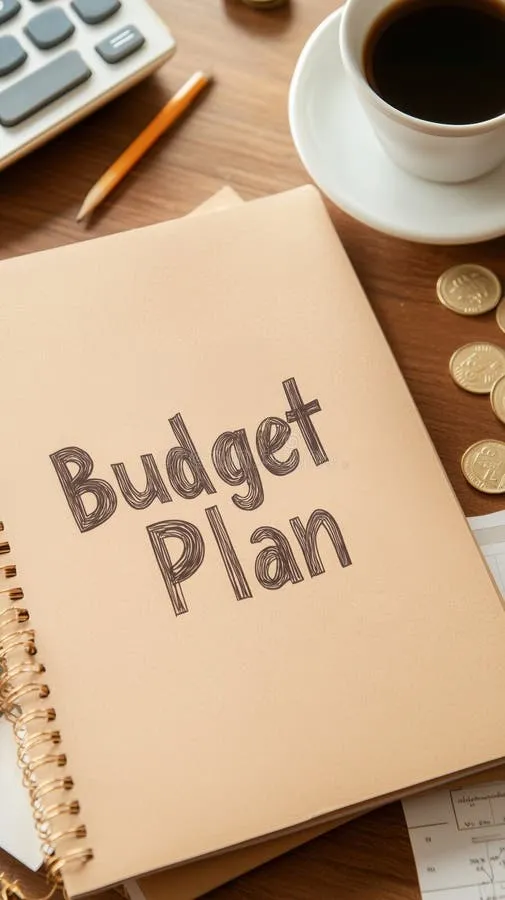
Photo: notebook budget planning coffee table freelancer desk, via thumbs.dreamstime.com
Let's talk about the thing nobody puts on the tour rider: money. Not in a hustle-culture, 'manifest your abundance' way. In a boring, spreadsheet, FICO-score way. Because here's what twenty years around working entertainers has taught me — talent gets you in the room, but cash flow decides how long you get to stay.
And if you're a freelancer, a gig worker, or anyone whose income looks like a seismograph, the traditional financial advice you've been handed is basically useless. 'Save three months of expenses' — great, on which month? The one where you made nine grand or the one where you made nine hundred?
The Baseline Budget: Your Income Has a Floor, Find It
The first move is counterintuitive. Instead of budgeting around your best months or your average months, budget around your worst realistic month. Pull twelve months of bank statements, find the lowest income month that wasn't a total catastrophe, and build your fixed expenses to fit inside it.
Everything above that baseline? That's not lifestyle money. That's allocation money, and it gets split before you ever feel it: a chunk to taxes (a quarter off the top, always — the IRS does not care about your artistic integrity), a chunk to the buffer account, a chunk to fun. Yes, fun. Deprivation budgets fail the way crash diets fail.
The buffer account is the secret weapon. When a fat month lands, it goes there first. When a dry month hits, you pay yourself a flat 'salary' from it. Congratulations — you've just manufactured the steady paycheck your bank app keeps begging you for.
Retirement Accounts for People Without HR Departments
Nobody in film school explained this, so I will: if you're self-employed, the government has built you some genuinely good vehicles, and skipping them is lighting money on fire.
- A Roth or Traditional IRA is the floor. Open one, automate even $100 a month into a low-cost index fund, and stop thinking about it. Future you, at 65, will want to hug present you.
- A SEP-IRA or Solo 401(k) is the upgrade. These let you stash away far more, and the contribution limits scale with your income — meaning your big years can do heavy lifting for your lean ones. A tax pro costs a few hundred dollars and will save you multiples of that.
- A plain old high-yield savings account is your bridge between gigs, and it should be separate from your checking so you can't see it and can't touch it.
The gig economy has made 'freelancer' the new normal — millions of Americans piece together a living from contracts, residuals, and side hustles. The financial industry is slowly catching up. Don't wait for it to catch up to you.
Money Isn't a Sellout. Money Is a Creative Instrument.
I saved the opinion part for the end because I know how this lands in artistic circles. Somewhere along the way, a lot of us absorbed the idea that thinking about money is a betrayal of the work. That the 'real' artists starve beautifully.
That's a lie, and it's a lie that benefits people who aren't you. Financial stress doesn't make your art purer — it makes it desperate, and desperation is audible in everything. The most fearless creative work I've ever encountered came from people whose bills were handled. Not rich. Handled. There's a difference, and it's the whole difference.
Money in the bank is options. Options are time. Time is the raw material of every good decision you'll ever make about your career — the ability to turn down the wrong project, to take the unpaid passion job, to walk away from a deal that smells off.
So reframe it: every dollar you automate into that IRA is a vote for the artist you get to be at fifty. Every month your buffer covers, you bought with last year's good season. That's not selling out. That's financing the only thing that matters — the next thing you make.
The rollercoaster never stops. But you can build a harness. Start with the baseline, fund the buffer, open the boring account, and get back to work.