The Price of Keeping It Real: What Authenticity Actually Costs You in This Industry
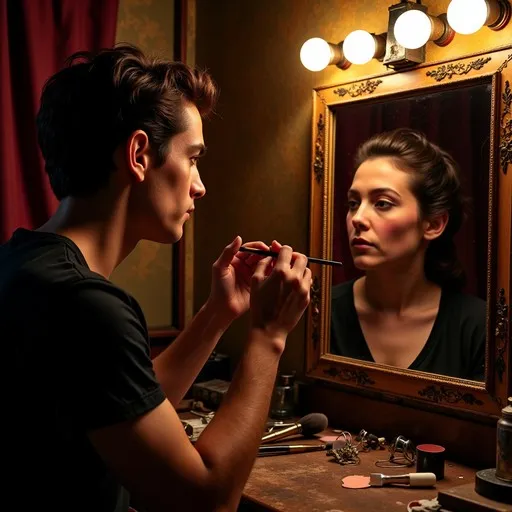
Photo: entertainer woman thinking backstage dressing room mirror reflection, via images.stockcake.com
Everybody loves the idea of an entertainer who keeps it real. Fans celebrate it. Podcasts praise it. Brands slap the word "authentic" on every campaign brief like it's a magic ingredient. But here's the part nobody talks about at the panel discussion or in the inspirational Instagram caption: keeping it real has a price tag. Sometimes it's steep.
If you've ever turned down a deal because it didn't feel like you, passed on a collaboration that would've paid rent for six months, or watched someone with half your talent blow up because they were willing to play a character you weren't — you already know what I'm talking about. This isn't a pep talk. It's a real conversation about what authenticity actually costs, and how to decide whether it's worth paying.
The Opportunities That Walk Out the Door
Let's start with the most obvious cost: money left on the table.
Every entertainer who builds a brand around who they actually are will eventually hit a moment where a lucrative opportunity shows up wearing the wrong face. Maybe it's a sponsorship from a company whose values don't line up with yours. Maybe it's a role that would get you visibility but requires you to shrink yourself in ways that feel wrong. Maybe it's a feature with someone whose public image conflicts with everything you stand for.
Saying no to those things is a choice that deserves respect. But let's not pretend it doesn't sting. The industry rewards flexibility. Gatekeepers — managers, label execs, casting directors, brand partners — often prefer a performer who can be shaped. Someone with sharp edges and a clear point of view can be harder to package, and packaging is how this business moves.
The practical move here isn't to become shapeless. It's to get clear on your non-negotiables before you're sitting across from someone waving a check. Know which values are load-bearing and which preferences are just habits. That clarity makes it easier to say yes to the right things and no to the wrong ones without second-guessing yourself for weeks.
The Exhaustion Nobody Warns You About
There's a different kind of cost that doesn't show up in your bank account — it shows up in your body.
Being genuinely yourself in a public-facing career requires constant, low-grade courage. You're not just performing a version of yourself that's been focus-grouped and approved. You're showing up with your actual opinions, your actual aesthetic, your actual story. And every time you do that, you're accepting the possibility that people will reject you — not a character, not a persona, but you.
That vulnerability is meaningful. It's also exhausting. Entertainers who commit to authenticity often find themselves doing more emotional labor than their peers who are playing a polished role. When criticism lands, it lands personally. When the audience doesn't connect, it can feel like a referendum on who you are rather than what you made.
Protecting your energy here isn't about toughening up or caring less. It's about building a support system that's honest with you, setting real limits around how much of your private self becomes public content, and giving yourself permission to have an interior life that doesn't need to be shared. Not everything has to be content. Some things get to just be yours.
Navigating Gatekeepers Who Want You Smoother
The entertainment industry has a long history of asking people — especially women, especially people of color, especially anyone who doesn't fit a familiar mold — to sand down the parts of themselves that make other people uncomfortable. That pressure is real, and it doesn't always come from obvious villains. Sometimes it comes from people who genuinely believe they're helping you.
"You'd be more bookable if you softened your image." "Brands want someone a little more approachable." "The audience isn't ready for that yet."
These notes can be well-intentioned and still be wrong for you. The challenge is learning to hear industry feedback without automatically internalizing it as truth. Some of it is useful — a trusted collaborator who knows your work and wants to help you reach more people is worth listening to. But feedback that consistently asks you to become smaller, quieter, or more generic deserves scrutiny.
One practical approach: find a small circle of peers who are building their own authentic brands and use each other as sounding boards. Not yes-people, but people who understand what you're trying to do and can help you tell the difference between growth and compromise.
Building Income Without Selling Yourself Out
Here's the part that actually matters practically: you can protect your authentic brand and build sustainable income. They're not mutually exclusive, but they do require strategy.
Diversifying your revenue streams is a real buffer. When you're not dependent on a single deal, a single platform, or a single type of opportunity, you have more freedom to decline things that don't fit. That might mean building direct-to-fan income through a newsletter, a Patreon, merchandise that actually reflects your aesthetic, or a body of work that generates passive revenue over time.
It also means being proactive about the partnerships you do want. Instead of waiting for brands to approach you and then filtering out the bad fits, identify companies and collaborators whose values genuinely align with yours and pursue those relationships. Authenticity isn't just about what you say no to — it's about what you actively build.
The entertainers who make this work long-term aren't the ones who never compromise. They're the ones who know exactly where their line is, communicate it clearly, and build a career around the side of that line they actually want to live on.
The Real Return on Investment
None of this means the cost of keeping it real disappears. It doesn't. There will be moments where your authenticity is genuinely expensive — financially, emotionally, professionally. That's not a bug in the system. It's the deal.
But here's what you get in return: a career that doesn't require you to remember which version of yourself you're supposed to be today. An audience that's connected to something real. Work that compounds over time because it's rooted in something consistent. And at the end of the day, a relationship with your own creative life that you can actually live inside of.
That's not nothing. For a lot of entertainers, it's everything.
The price of keeping it real is real. Whether it's worth it is a question only you can answer — but at least now you know what you're actually paying for.