When the Applause Stops: Checking In With Yourself Before the Work Checks Out
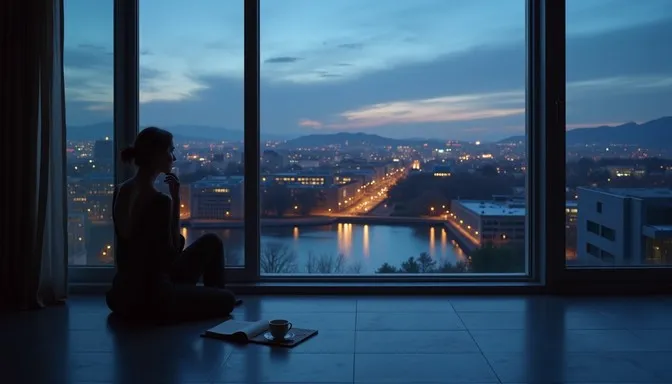
Photo: woman alone late night thinking city lights window reflection, via images.stockcake.com
Let's say it's late. Like, actually late — the kind of late where the notifications have finally gone quiet and it's just you and the ceiling. Maybe you had a great day. Maybe you didn't. Either way, there's this low hum underneath everything, a question you keep brushing past because the schedule doesn't leave room for it.
Why am I doing this?
Not in an existential-crisis way. More like a check-engine light that's been on for a while and you've been meaning to look into it.
If you're an entertainer — whether you're performing, creating content, building a brand, or some combination of all three — this question is worth taking seriously. Not because the answer is probably bad, but because not knowing the answer tends to catch up with you eventually.
The Difference Between Passion and Need
Here's a distinction that sounds simple but gets murky fast: there's a difference between doing creative work because it fills you and doing it because you're trying to fill a hole.
Both can look identical from the outside. Both can produce real, quality work. But they feel different from the inside, and they have very different long-term trajectories.
Artistic passion has a self-sustaining quality to it. It's the thing you'd do even if nobody watched, even if the numbers were bad, even if your last three projects flopped. It costs you energy in the moment but returns something — a sense of meaning, of expression, of being fully alive in your work.
Validation-seeking has a different texture. It's hungry in a way that doesn't really get satisfied. A great comment thread feels good for about twenty minutes and then you're back to needing the next one. A project lands well and instead of feeling complete, you immediately start anxious-refreshing to make sure it's still landing well. The work starts to feel like a bid for approval rather than an expression of something internal.
Neither is shameful. But only one of them is sustainable.
The Late-Night Audit (No Clipboard Required)
You don't need a therapist or a journal prompt or a weekend retreat to do this. You just need some honest quiet and a willingness to sit with uncomfortable answers.
Try asking yourself these questions — not out loud, not performatively, just actually:
If this project got zero engagement — no likes, no comments, no shares — would I still be glad I made it?
If the honest answer is yes, that's a good sign. The work has intrinsic value to you. If the answer is no, or if you feel a spike of anxiety just imagining it, that's worth sitting with. It doesn't mean you're broken — it means you might be more dependent on external validation than you realized.
When did I last do something creative that nobody else saw?
For entertainers and public creators especially, everything eventually becomes content. But if nothing stays private — if you can't remember the last time you made something just for yourself — that's a signal. The creative muscle that operates without an audience is an important one. If it's atrophied, the work tends to get shallower over time.
What would I do differently if I knew my audience would love it no matter what?
This one's sneaky. The gap between your honest answer and what you're actually doing tells you a lot about where fear has crept into your creative process. Maybe you'd take more risks. Maybe you'd talk about different things. Maybe you'd slow down. Whatever shows up in that gap is probably worth paying attention to.
What Misalignment Actually Feels Like
Sometimes the check-engine light isn't a big dramatic crisis — it's subtler than that. It might look like:
- Dreading the thing you used to love
- Feeling relieved when something gets canceled instead of disappointed
- A constant low-grade resentment toward your audience, even when they're being great
- Performing emotions you don't actually feel because you know it's what lands
- An inability to enjoy your own wins for more than a few hours
Any one of these can have a dozen explanations. But if several of them are familiar, it's worth asking whether the why behind your work has drifted somewhere you didn't intend.
Getting Back to Center (Without Burning Everything Down)
If you do this audit and find that things are a little off — cool. That's actually the best possible outcome of this exercise, because now you can do something about it.
You don't have to quit, rebrand, or write a lengthy statement about your creative journey. Small recalibrations work. Try a few of these:
Make one thing this week that you're not going to post. A voice memo, a sketch, a short video, a written piece. Just make it and keep it. Practice the feeling of creating without the transaction.
Trace your best work back to its origin. Think about the project or performance you're most proud of — not most successful, most proud of — and ask yourself what was happening in your life when you made it. What were you thinking about? What were you not worried about? That context often holds clues about what your work needs more of.
Have one honest conversation with someone who isn't in your industry. Not for advice — just for the perspective shift. Talking to someone who doesn't care about your metrics has a way of reminding you that you exist outside of them.
The Work Will Tell You
Here's the thing about doing a real check-in with yourself: the work knows before you do. When your motivation starts to drift, it shows up in the output before it shows up in your awareness. Things get a little flatter. A little more calculated. A little less alive.
The late-night audit isn't about finding a problem. It's about staying close enough to your own reasons that you notice when they start to shift — and having the honesty to course-correct before the drift becomes a canyon.
You got into this because something in you needed to express something. That's worth protecting. And checking in on it every once in a while isn't weakness — it's just good maintenance.