The Person Behind the Profile: Surviving the Emotional Weight of Your Own Brand

Photo: tired young woman sitting at desk with laptop surrounded by papers looking overwhelmed, via img.freepik.com
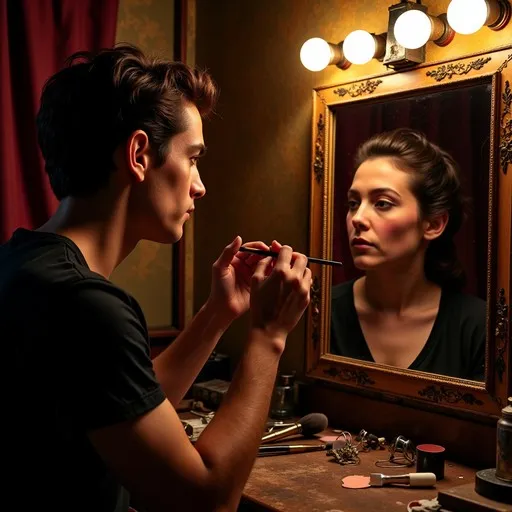
There's a version of you that exists online. She shows up on time, looks great, says the right things, engages with comments, posts consistently, and seems to have it more or less figured out. She's charming. She's relatable. She's on.
And then there's the actual you — the one who stayed up until 2 a.m. editing that post, who stress-ate an entire sleeve of Oreos before hitting publish, who read one critical comment and let it ruin a perfectly good Thursday.
If you've built any kind of public-facing career — as an entertainer, a creator, a performer, an artist — you know exactly what I'm talking about. The gap between the persona and the person is real, and managing that gap is its own full-time job that nobody put in the original job description.
Let's talk about it honestly.
What Nobody Tells You About Being 'On' All the Time
When you decide to build a personal brand, you're essentially agreeing to a contract with your audience. They show up for you, and in exchange, you show up for them — consistently, authentically, engagingly. It's a beautiful relationship when it works. It's also, quietly, relentless.
The expectation of constant availability doesn't always come from fans being demanding (though sometimes it does). A lot of it is self-imposed. You see the metrics dip when you go quiet. You feel the anxiety of a missed posting day like a missed rent payment. You start to conflate your value as a person with your performance as a brand.
That's where things get complicated.
Psychologists call it emotional labor — the work of managing your feelings and expressions to fulfill the emotional requirements of a role. Flight attendants do it. Teachers do it. And entertainers do it constantly, often without recognizing it as labor at all. Because when your personality is your product, the line between working and existing gets blurry fast.
Imposter Syndrome Doesn't Care How Many Followers You Have
Here's a fun irony: the bigger your platform grows, the louder the imposter syndrome can get.
You'd think that external validation would quiet that inner critic. More fans, more engagement, more opportunities — surely that's proof you belong here, right? Not always. For a lot of entertainers, growth actually amplifies the fear. Now there are more people who could discover you're a fraud. More eyes to disappoint. More to lose.
This is especially true for people who built their brand on authenticity — on being real and relatable. Because the moment you start worrying about maintaining that image, you've introduced a layer of performance into the very thing that was supposed to be genuine. It's a loop that can mess with your head if you let it.
The antidote isn't to perform confidence you don't feel. It's to separate your worth from your metrics. Easier said than done, obviously. But it starts with recognizing that the voice telling you you're a fraud isn't giving you information — it's just scared.
Burnout Looks Different When Your Job Is Being Yourself
Regular burnout — the kind that happens in corporate jobs or service industry gigs — is bad enough. But creative burnout, particularly the kind that comes from maintaining a public persona, has its own specific flavor.
It's not just exhaustion. It's a kind of creative numbness where the things that used to excite you start to feel like obligations. You open your notes app to brainstorm content and it's just... blank. Not empty in a restful way. Empty in a way that feels like something's been taken from you.
When that happens, the instinct is often to push harder. Post more, engage more, try harder to reconnect with the energy you used to have. That's usually the wrong move.
What actually helps:
- Designate offline time that isn't negotiable. Not "I'll try to take Sunday off" — actual, calendar-blocked, phone-in-another-room time. Your brain needs space where it isn't being a brand.
- Create something you'll never publish. Write a song, sketch a concept, film a video — just for you. Remind yourself why you started doing this before anyone was watching.
- Talk to someone outside your industry. Friends who don't live in the same creative ecosystem as you can offer perspective that's genuinely grounding. They see you as a person first, not a persona.
Setting Boundaries Without Burning Bridges
One of the hardest parts of building a public career is figuring out where you end and where the audience's access begins. Fans can feel entitled to a level of intimacy that isn't always healthy to give. Collaborators can blur professional lines. Even well-meaning people in your corner can accidentally treat the brand as the priority over the human.
Boundary-setting in this world isn't about being cold or inaccessible. It's about deciding in advance — not in the moment of pressure — what you're willing to share, what you're keeping private, and what your non-negotiables are.
Some things worth getting clear on:
- What aspects of your personal life are genuinely off-limits, and are you consistent about that?
- Do you have a system for handling negative feedback that doesn't involve reading it at midnight alone?
- Are there collaborations or opportunities you keep saying yes to out of guilt or FOMO rather than genuine alignment?
You don't owe anyone unlimited access to yourself. That's not a betrayal of your audience — it's what makes a long career possible.
The Most Radical Thing You Can Do Is Rest
In an industry that celebrates hustle and visibility, choosing to step back — even briefly — can feel like professional suicide. It's not. It's maintenance.
The most sustainable entertainers aren't the ones who never slow down. They're the ones who've figured out how to replenish what the work takes from them. They treat their mental and emotional health as infrastructure, not indulgence.
You are not a content machine. You are a person who makes content. The distinction sounds small, but it changes everything about how you approach the work — and how long you can keep doing it.
The persona can wait. Take care of the person first.